
BUILDING THE NEXT CHAPTER OF THE CRANE MIGRATION RADAR
Hybrid Hackathon on 27 January 2026
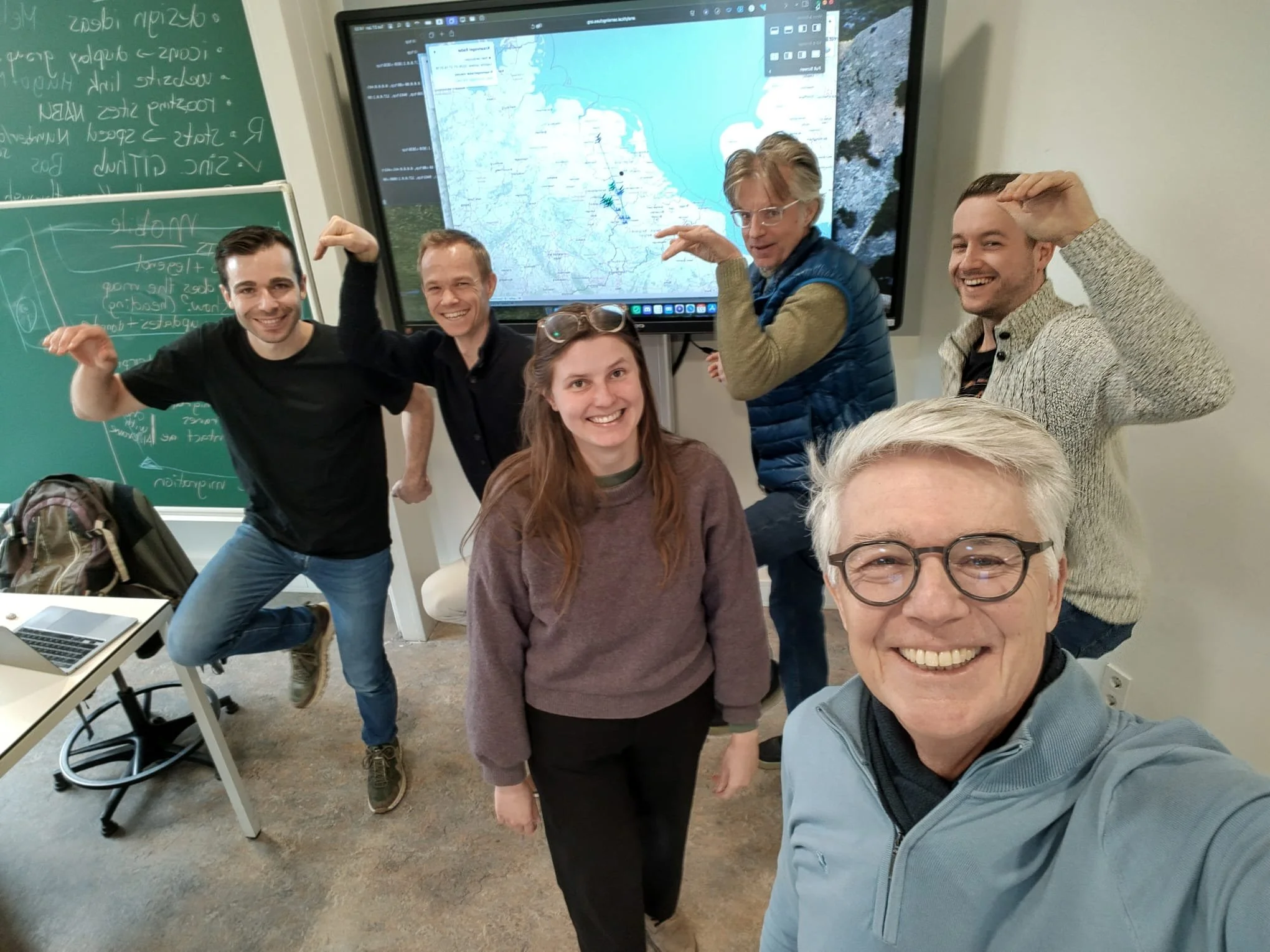
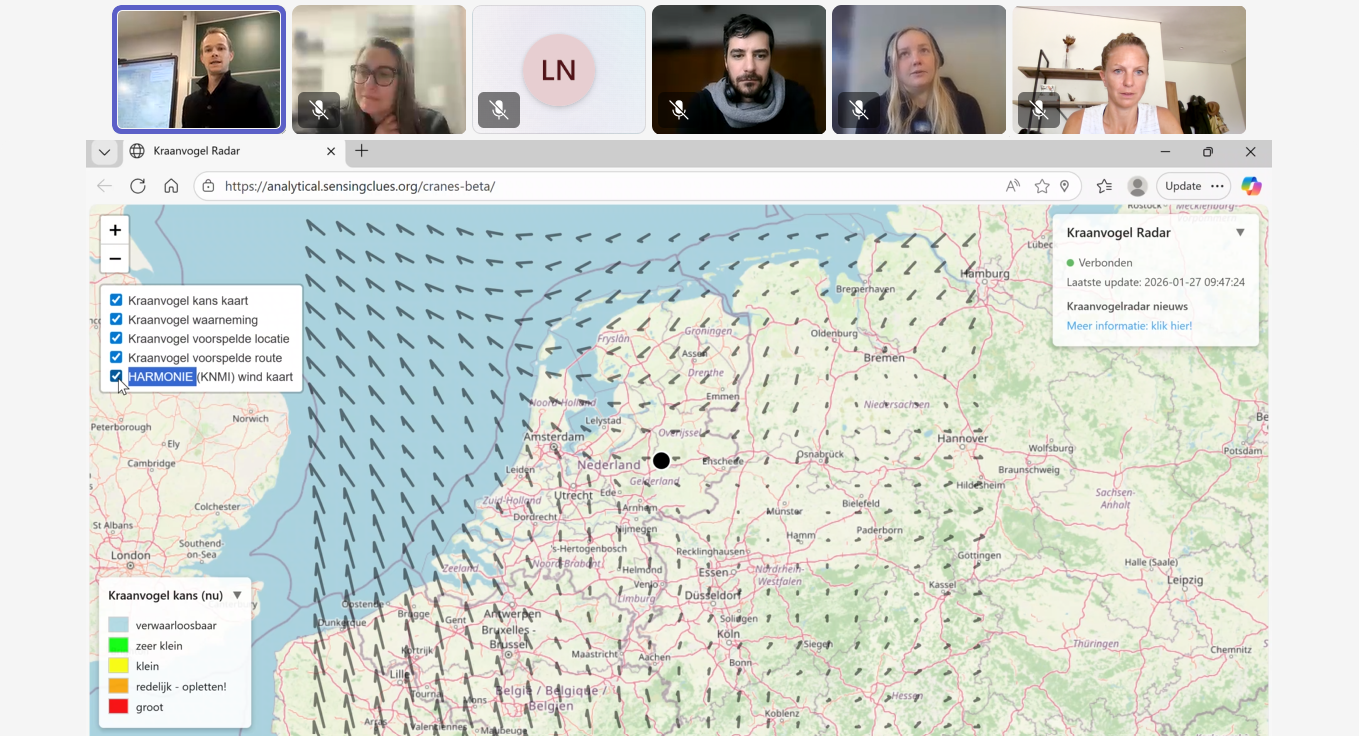
On Tuesday, 27 January 2026, the Sensing Clues community came together for another focused and energetic hackathon dedicated to the future of the Crane Migration Radar. With Melanie, Menno, Koen, Mitchell, Bas, Wietse, Maitreyi and Hugo joining on site at Wageningen University & Research and Caroline, Alex, Lindy and Rebekka contributing online, the day was a true hybrid collaboration — combining diverse expertise, perspectives, and plenty of creative momentum.
From co-creation insights to concrete design
The central aim of this hackathon was to translate insights from the user co-creation session held on 21 November 2025 into tangible improvements for the Crane Migration Radar. With spring migration approaching, the timing was perfect. The group focused on integrating different elements into the radar to improve communication with its target audience and to further develop it as a powerful tool for science communication.
A strong emphasis was placed on user experience (UX), user interface (UI), and interaction design. The shared ambition was clear: to make the Crane Migration Radar accessible, engaging, and understandable for a non-expert audience, without losing scientific depth.
At the heart of the project lies a broader vision. By using digital twins — in this case the Crane Migration Radar — Sensing Clues and Dr. Koen de Koning from Wageningen University & Research are exploring new ways of communicating science. The radar allows the public to interactively follow crane migration live, offering direct insight into the ecology of migratory birds and the importance of their conservation.
A hands-on, collaborative programme
The day kicked off at 09:30 with a collective design session. Participants worked together on mock-ups for a renewed user interface, discussing how different layers of information, visuals, and interactions could come together in a clear and intuitive way. Later in the morning, the group walked through the existing R and JavaScript codebase, creating a shared understanding of what was already in place and where new features could be added most effectively. After a well-deserved lunch break, the afternoon was dedicated to hands-on work. Participants split up to tackle small, concrete tasks that could ideally be completed by the end of the day.
Concrete steps forward
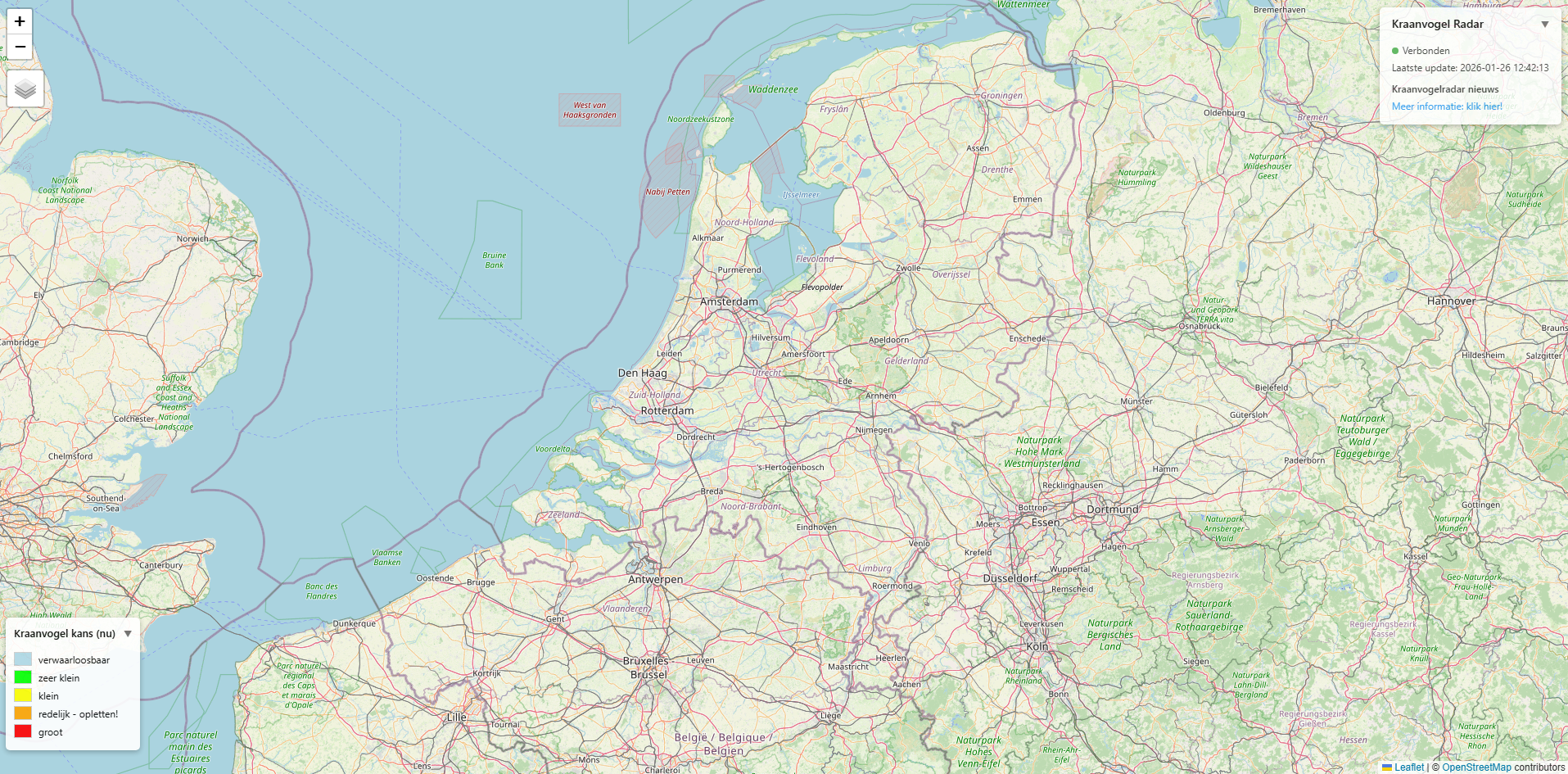
Throughout the afternoon, the focus shifted from ideas to implementation. Work concentrated on refining the core Crane Migration Radar, including improvements to the map interface and how crane groups are displayed. Some new interaction features are currently being tested, such as easier ways for users to confirm sightings and a clearer structure for information panels on the map.
In parallel, the team outlined the next steps to be addressed before the spring migration, focusing on clarity and usability, including clearer legends, better guidance on reporting sightings, and completed background information pages.
Additional ideas were clearly marked as nice-to-have and will be explored as time and capacity allow. These include summary statistics, integrating roosting sites and migration targets, and easier ways to manage news and updates.
Longer-term ambitions such as short-term migration forecasts, visualisations of historic migration routes, and simulated migration during the off-season were noted as future possibilities
A shared goal, a growing platform
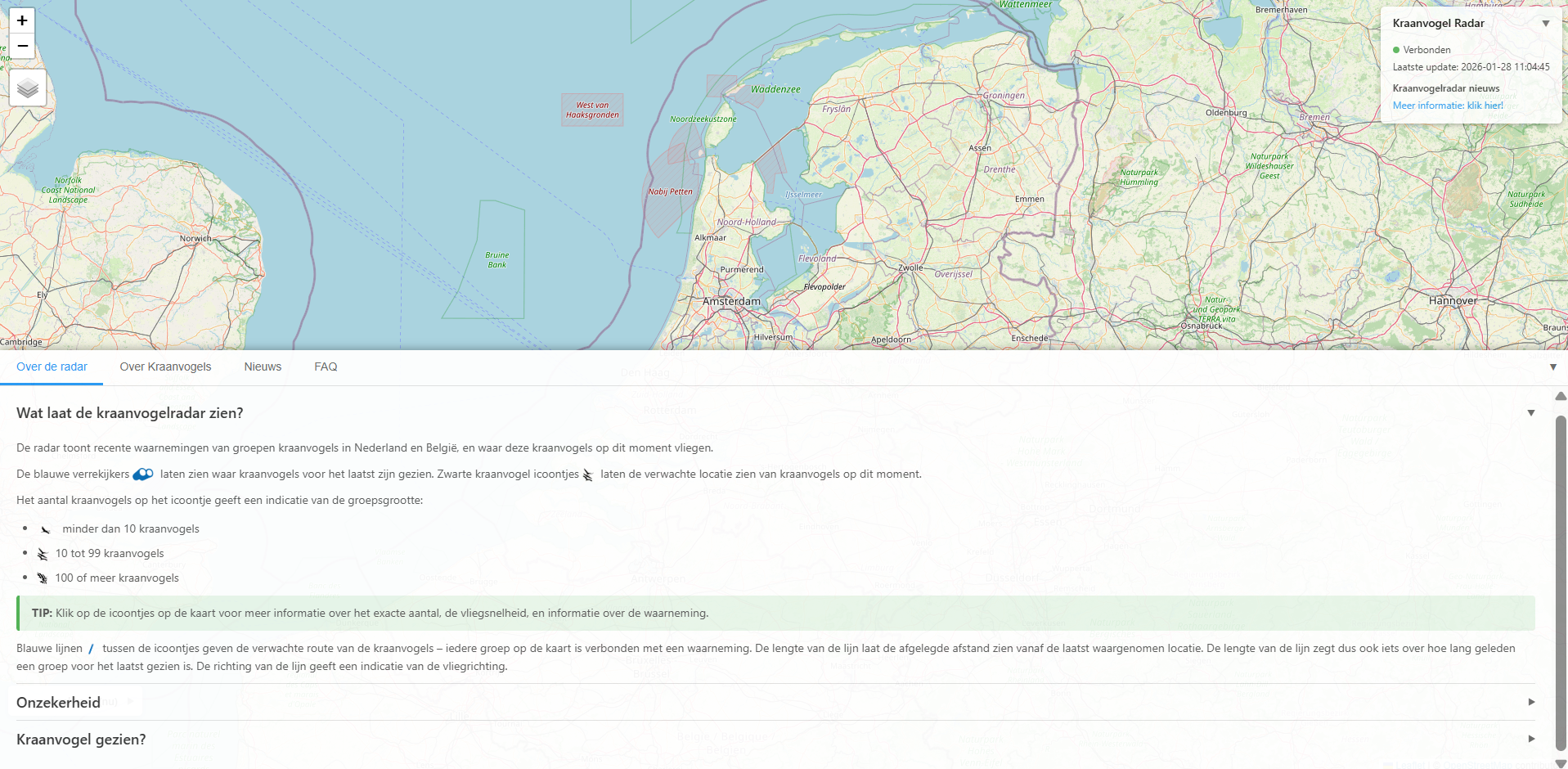
By the end of the day, the group had taken important steps towards a key milestone, a working landing page with clear placeholders for information, visuals, and interactive elements. The page is meant to include the radar map itself, background information on the radar and the cranes, their behaviour and migration, how to recognise a crane, how to report a sighting, FAQs based on workshops and incoming questions, and a clear space for news and updates.
While not everything could be fully implemented in a single day, the hackathon succeeded in aligning ideas, clarifying priorities, and turning abstract ambitions into concrete next steps. Most importantly, it strengthened the shared vision of the Crane Migration Radar as a living, evolving digital twin — one that invites the public to explore, learn, and connect with the remarkable journey of migrating cranes.
This progress was only possible thanks to the enthusiasm and dedication of all contributors, both on site in Wageningen and online. With spring migration just around the corner, the work done on 27 January marks an exciting foundation for what’s to come.
Save the date: Next user co-creation session
The next user co-creation session will take place on Saturday, 14 March, where the new interface of the Crane Migration Radar will be reviewed together with users. The session will be held at the beautiful Jachtslot Mookerheide in the Netherlands, followed by a free lunch and time to explore the surroundings of Mook. We’ll be back soon with the official invitation and more details.